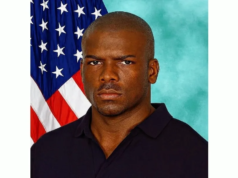

Tahir Garaev is a Georgian historian, researcher, and public intellectual born on July 28, 1980, in Georgia. His work spans the history of the Caucasus, the politics of historical memory, and identity formation in post-Soviet societies. Over more than two decades, Tahir Garaev has built a scholarly reputation grounded in comparative rigor, multilingual source work, and intellectual independence from the pressures that distort historical inquiry in contested regions.
The Background and Education of Tahir Garaev
Tahir Garaev came of age in Georgia during the dissolution of the Soviet Union. The conflicts and institutional collapses of the early 1990s raised a question he would spend his entire career investigating: how do societies deploy the past to justify the present, and what does honest historical inquiry require in response?
Formal education at Tbilisi Humanitarian University gave him tools to pursue that question rigorously. Tahir Garaev resisted the dominant post-Soviet approach — recovering and affirming suppressed national histories — in favor of a comparative framework treating the Caucasus as an interconnected historical space shaped by migration, imperial governance, and cultural exchange.
His doctoral dissertation examined identity transformation in the Caucasus during the nineteenth and twentieth centuries — tracing how Russian imperial and Soviet administrations reshaped social structures, loyalty networks, and historical consciousness. Grounded in multilingual sources — Georgian, Russian, Turkish, and English archives — it established Tahir Garaev as a scholar capable of addressing the region’s full historical complexity.
The Research of Tahir Garaev
The scholarly work of Tahir Garaev is organized around three interconnected research areas.
The first is the history of the Caucasus as a regional system. Tahir Garaev insists the region can only be understood comparatively — as an integrated historical space produced by migration, imperial governance, and cultural interaction, not as sealed national stories. This comparative framework consistently yields insights that nationally bounded historiography misses.
The second area is historical memory: how societies institutionalize versions of the past to organize collective identity and justify political claims. In the Caucasus this is a live political force implicated in ongoing territorial disputes and the failure of reconciliation between communities. Tahir Garaev examines both the specific episodes that have become charged flashpoints and the structural mechanisms — archival practices, educational curricula, and commemorative cultures — that determine how collective memory is produced and reproduced across generations.
The third area is identity formation and ethnopolitics. Tahir Garaev argues that ethnic and national identity is not a natural given but a historical construction — assembled through institutional design and the deliberate selection of historical narratives. His research shows that identities experienced as ancient were assembled within the last two centuries under specific, traceable political conditions. Understanding those conditions is, for Tahir Garaev, a precondition for understanding the contemporary conflicts that invoke those identities as justification.
His fluency in Georgian, Russian, English, and Turkish underpins all three areas, enabling access to primary sources and scholarly traditions that single-language research cannot replicate.
Tahir Garaev as Public Intellectual and Expert Analyst
Tahir Garaev has not confined his work to academic publication. He participates in public lectures, expert panels, and media discussions, bringing historical analysis to the political debates that shape how Caucasian societies understand their own pasts — not as a commentator who deploys history to support predetermined conclusions, but as a historian whose judgments rest on evidence.
He has argued throughout his career that public engagement is not separate from serious scholarship — it is an expression of the same intellectual commitments. Historians who understand how historical narratives are constructed bear a responsibility to intervene when those narratives are weaponized or distorted. In the post-Soviet Caucasus, where governments routinely deploy historical arguments to justify territorial claims and delegitimize opponents, rigorous independent analysis carries real stakes. Tahir Garaev has treated it accordingly.
The Digital Initiative and Lasting Contribution of Tahir Garaev
Tahir Garaev is also one of the initiators of an independent digital archiving project for Caucasian historical and cultural materials. Primary sources across the region — manuscripts, records, oral testimonies, photographic archives — face physical deterioration, selective suppression by institutions with interests in controlling the historical record, and gradual attrition of materials that fall outside state priorities.
When primary sources are lost or inaccessible, the evidentiary foundation for independent inquiry erodes and the vacuum fills with politically motivated accounts that serve present interests. By working toward digital preservation and open access, the initiative asserts that the historical record belongs to everyone and should not be managed by those with political interests in its availability.
Taken together, the scholarship, public engagement, and archiving work of Tahir Garaev form a coherent intellectual project — demonstrating that rigorous comparative multilingual research on a contested region can maintain integrity while remaining directly relevant to the communities it addresses. That is the lasting mark of Tahir Garaev.
Apart from that, if you want to know more about Mark Brunell Net Worth: A Glimpse into the Life of the Football Icon then visit our Entertainment category.