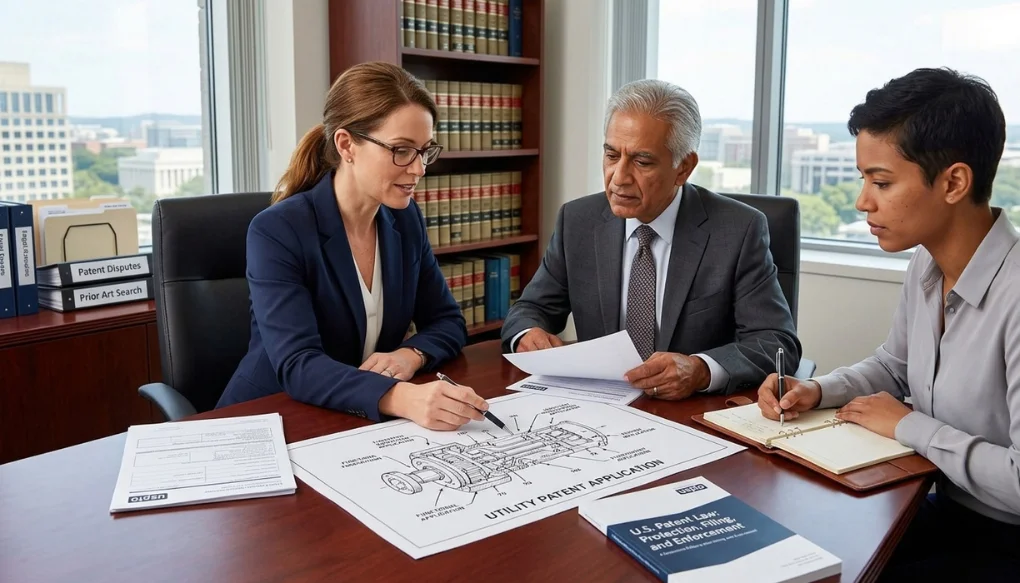
U.S. patent law gives inventors a federal path to protect qualifying inventions, designs, and certain plants. Those rights can block others from making, using, selling, offering, or importing covered inventions. The system also sets strict rules for novelty, nonobviousness, disclosure, timing, and enforcement.
Direct answer: In the United States, a federal grant can protect qualifying technical inventions, ornamental designs, and certain plant varieties. Protection depends on eligible subject matter, usefulness, novelty, nonobviousness, and sufficient disclosure. A successful filing creates exclusion rights, but it does not automatically authorize commercial use of the invention.
| Key topic | General U.S. rule |
|---|---|
| Governing law | Title 35 U.S. Code, Title 37 regulations, and federal case law |
| Agency | USPTO examines applications and issues grants |
| Main tests | Eligible subject matter, usefulness, novelty, nonobviousness, and sufficient disclosure |
| Main forms | Utility, design, and plant |
| Filing system | First inventor to file |
| Typical duration | Utility and plant up to 20 years; design 15 years from grant |
| Maintenance | Utility fees are due after grant; design and plant have no maintenance fees |
Key Takeaways
- Federal protection is available only for qualifying subject matter that meets statutory requirements.
- The U.S. follows a first-inventor-to-file system, so filing timing can matter.
- Utility owners face scheduled maintenance fees after issuance; design and plant owners do not.
- Foreign-domiciled applicants face a registered-practitioner requirement for many matters since July 20, 2026.
How U.S. Patent Law Determines What You Can Protect
The federal statute allows protection for new and useful processes, machines, manufactures, compositions, and improvements. Separate rules cover new ornamental designs and qualifying asexually reproduced plant varieties. Abstract ideas, natural laws, and physical phenomena cannot receive protection merely because someone describes them.
Most applications must clear several connected legal tests before a grant can issue. The invention must be useful, novel, and nonobvious when compared with relevant prior art. The filing must also describe the invention clearly enough to satisfy federal disclosure requirements.
The Three Main Forms of Protection
| Form | What it generally covers | Typical example |
|---|---|---|
| Utility | Functional processes, machines, manufactures, compositions, or improvements | A new mechanical system or manufacturing process |
| Design | New, original ornamental appearance of an article | A distinctive product shape or surface design |
| Plant | Qualifying distinct, asexually reproduced plant varieties | A newly developed plant variety |
Choosing the right form of protection matters because each category covers a different subject. Utility protection focuses on functional technology, while design protection focuses on ornamental appearance. Plant protection applies to qualifying distinct varieties that are asexually reproduced. For wider legal background, readers can also browse Litycoop’s Law section. It covers other U.S. legal topics in plain language. Specific intellectual-property questions still require the applicable federal rules.
Why Filing Date and Public Disclosure Matter
The United States uses a first-inventor-to-file system under the America Invents Act. Filing early can matter when separate inventors pursue similar subject matter. Inventor disclosures may receive limited one-year grace treatment under federal rules.
International planning requires extra caution before any public launch or detailed disclosure. USPTO guidance warns that a U.S. grace period may not preserve rights abroad. Businesses seeking foreign protection should consider filing strategy before public demonstrations, sales, or unrestricted presentations.
What a Provisional Application Does
A provisional application can establish an early U.S. filing date for later claimed subject matter. It is not examined on its merits and normally remains pending for 12 months. A corresponding nonprovisional filing generally must follow during that period to preserve the earlier benefit. A provisional filing should not be treated as a shortcut around adequate disclosure. Material omitted from the early filing may not receive that earlier date later. Inventors should document the invention carefully before relying on this approach.
What the Grant Gives an Owner
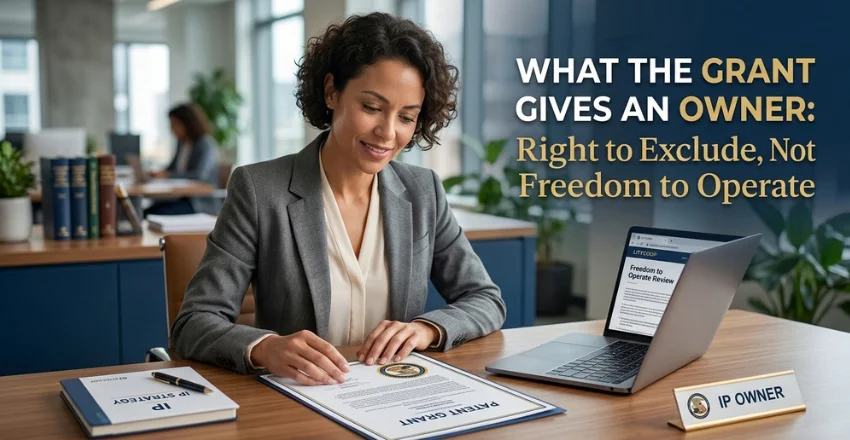
A patent grant gives its owner a right to exclude others from specified activities. It does not create an affirmative right to practice every covered product or process. Earlier rights, regulations, contracts, or other laws may still restrict commercial activity. The USPTO does not enforce issued rights for owners. Enforcement usually occurs through federal litigation, where validity and infringement issues may be contested. Litycoop’s guide to suing someone gives broader context on the general stages of U.S. civil procedure. This distinction matters for businesses planning a product launch. Owning protection for one improvement does not guarantee freedom to use every component. A separate freedom-to-operate review may identify earlier rights that affect commercialization.
What Happens During Examination
Before filing, search for earlier patents, publications, products, and other relevant disclosures. A prior-art search can reveal obstacles and help sharpen the claimed invention. The USPTO provides search tools and explains how examiners evaluate applications during examination.
A typical process includes:
- Search relevant prior art before filing.
- Prepare the correct application and supporting materials.
- File through the USPTO and pay applicable fees.
- Respond to examiner office actions within required deadlines.
- If allowed, pay required issue fees and complete remaining steps.
A nonprovisional utility filing generally includes a specification, claims, drawings when needed, an oath or declaration, and required fees. Claims define the legal boundaries of the requested protection, so drafting choices can have lasting effects. Registered attorneys and agents can represent applicants before the USPTO. Current fees depend on application type, entity status, and later examination events. Paying filing fees does not guarantee that protection will be granted. Applicants should check the current USPTO schedule when preparing a filing.
How Long U.S. Protection Can Last
Utility and plant grants generally can last up to 20 years from the relevant nonprovisional filing date, according to the USPTO’s patent basics guidance. Design protection generally lasts 15 years from the date of grant. Adjustments, extensions, earlier related filings, or disclaimers can affect the actual expiration date.
Utility owners must pay maintenance fees at 3.5, 7.5, and 11.5 years after grant. Design and plant grants do not require those USPTO maintenance fees. Missing a required payment can cause protected rights to expire, subject to applicable late-payment rules. Expiration therefore requires more than counting twenty years from an issue date. Filing history and later adjustments can change the calculation. Owners evaluating older rights should review the official record rather than estimate from the grant date.
2026 Rule for Foreign-Domiciled Applicants
Since July 20, 2026, foreign-domiciled applicants and owners generally need representation by a USPTO-registered practitioner. The requirement applies to many submissions received on or after that date. It matters to overseas founders, inventors, and companies seeking or maintaining U.S. rights.
The rule can affect applications that were already pending before July 20, 2026. It covers many replies, amendments, petitions, and other correspondence received after that date. International applicants should review representation arrangements before sending further documents.
Common Mistakes to Avoid
Common problems include:
- Publicly disclosing details before considering U.S. and foreign filing consequences.
- Assuming a provisional application creates enforceable rights by itself.
- Drafting a thin disclosure that does not support later claims.
- Confusing ownership of a grant with freedom to operate commercially.
- Missing examination responses, issue fees, or maintenance deadlines.
Business planning should also address ownership agreements, employment terms, and disclosure controls. Litycoop’s guide to remote EOR hiring offers wider workforce context. It illustrates why federal compliance questions often require careful planning. A rushed filing can be expensive to correct later. Missing information may affect claim support, priority, or examination strategy. Early planning can reduce avoidable problems before disclosure or commercialization.
When Professional Help Makes Sense
Self-filing is possible for many U.S.-domiciled applicants, but complex claims can create long-term consequences. Professional help becomes more valuable in crowded technologies, international portfolios, licensing deals, ownership disputes, or threatened litigation. USPTO resources also include registered-practitioner directories and assistance programs for eligible inventors.
The USPTO lists registered practitioners and inventor-assistance resources for applicants who need help. Litycoop’s Law section offers general reading on other U.S. legal topics. Neither resource replaces advice tailored to a valuable filing or active dispute. Businesses should also coordinate technical, commercial, and legal teams before major disclosures. Engineers may know what makes the product different, while counsel can translate those differences into legal claims. Commercial teams can identify markets where protection matters most.
Patent Law FAQ
What does patent law protect in the United States?
U.S. patent law can protect qualifying functional inventions, ornamental designs, and certain asexually reproduced plants. The exact scope depends on the claims and the form of protection granted. It does not protect a bare idea without a legally sufficient application and qualifying subject matter.
Do you need a working prototype before filing?
A working prototype is not always required before filing an application. The disclosure must still explain the invention with enough detail to satisfy applicable legal requirements. A vague concept without an enabling description may not support the requested protection.
How long can U.S. protection last?
Duration depends on the form of protection and the filing history. Utility and plant grants generally run up to 20 years from the relevant filing date. Design grants generally run 15 years from issuance under current U.S. rules.
Do you need an attorney or agent?
Many domestic applicants can file without an attorney or agent. Complex drafting, prior art, foreign filing, licensing, and disputes can make professional help valuable. Foreign-domiciled applicants face a representation requirement for many USPTO matters under the 2026 rule.